Benefits of Paced Bottle Feeding
When I first started my career as a doula (Tracy), I found that I had to do a lot of education on breastfeeding- positions, how often, etc. Sometime between then and now, there has been a major shift in education and hospital support for breastfeeding immediately following birth (which is wonderful a lot of the time!) Now, I find that some folks have an education gap regarding formula feeding, bottle feeding, and specifically paced bottle feeding.
If you’re preparing to bottle feed your baby, whether exclusively or alongside breastfeeding, you may have heard the term “paced bottle feeding” and wondered what it is/what it means. (Or maybe you know exactly what it is, but want an easy, shareable blog post to share with family or childcare providers)
Paced bottle feeding is a simple shift in how a bottle is offered, but it can be very different from bottle feeding practices of the past.
What Paced Bottle Feeding Actually Is
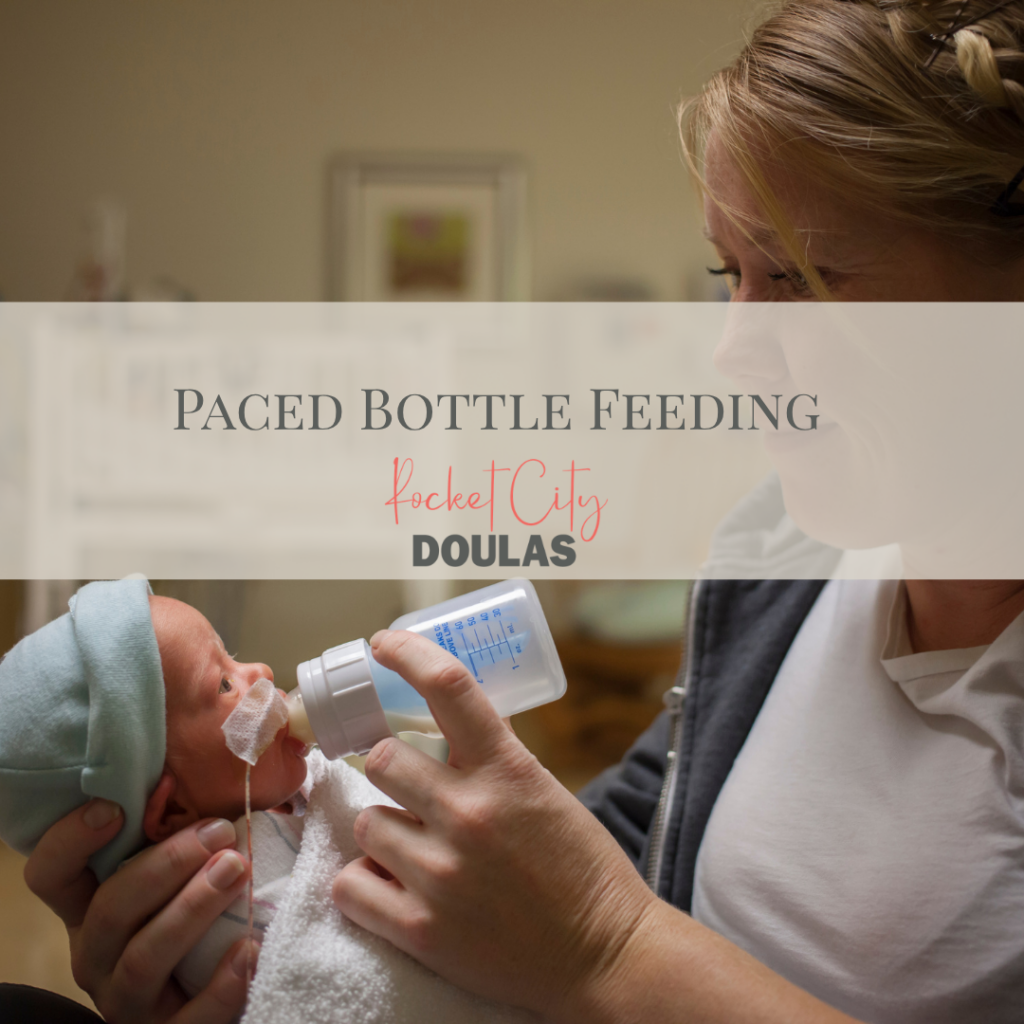
Traditional bottle feeding often has your baby lying back in a cradle position, with the bottle tilted up so the milk flows continuously. Sometimes this position allows milk to flow faster than your baby can comfortably eat/swallow. Paced bottle feeding is designed to help slow that flow down. Your baby is held more upright, the bottle is kept horizontal versus tilted, and the feeding incudes natural pauses that are baby-led. Your baby sets the sucking and swallowing rhythm instead of the bottle or nipple setting it for them.
Benefits of Paced Bottle Feeding for Baby
When my second child was 6 months old, I needed to introduce a bottle. Up until that point, he was exclusively fed at the breast. It was an extremely frustrating time for us. First, for him to take the bottle at all. Then, once he figured out that the bottle meant less work during feedings, he refused the breast. (We did eventually work it out, but it was exhausting.)
For breastfed babies who get occasional bottles, this paced bottle feeding more closely mimics the stop-and-start pattern of nursing. It can help make switching between breast and bottle less confusing. Some experts argue that babies do not have nipple confusion, but rather, flow confusion when swapping back and forth.
When a bottle allows milk to flow too fast, babies can end up taking more than their bodies are telling them to eat. Paced bottle feeding helps prevent that by giving the baby control over the pace, which supports their natural hunger and fullness cues rather than overriding them with continuously flowing milk.
This type of feeding can cut down on gas, reflux, and spit-up, since the baby isn’t gulping to keep up with the steady stream of milk. Because the baby is actively working to draw in milk rather than just swallowing it, paced bottle feeding also supports healthy oral motor development.
Benefits for the Feeding Relationship
Paced bottle feeding also changes the entire interaction of the feeding session. Any caregiver or family member, not just the breastfeeding parent, can bond with the baby through a slower, more responsive feed. Baby learns that feeding responds to their cues instead of the feeding overriding them, possibly reducing the kinds of issues that can develop around eating later in life (toddlerhood), supporting a healthy relationship with food and following hunger cues.
Risks
Since we are in the business of offering benefits and risks, sometimes paced bottle feeding can cause the baby to swallow more air than they otherwise would if the bottle is too horizontal. Paced bottle feeding is also not always recommended for babies who are having trouble eating or gaining weight. Be sure the talk to your child’s pediatrician to see if paced feeding is appropriate for your baby.
Who This Is Especially Useful For
Paced feeding is worth learning for any bottle-fed baby, but it’s particularly helpful for:
- Breastfed babies who get occasional bottles from a partner or caregiver
- Babies dealing with reflux or excess gas
- Any family who wants to build healthy feeding habits from the start
How to Pace Bottle Feed
- Position baby upright or semi-upright. This alone slows the flow and reduces the chance of choking or overfeeding.
- Keep the bottle horizontal, not tipped up. Milk should just barely reach the nipple, not flood it.
- Use a slow-flow nipple appropriate for baby’s age.
- Pause periodically, tipping the bottle down so milk stops flowing, and let baby restart the feed when they’re ready.
- Watch baby’s cues. Turning away, relaxed hands, or slowing suck rate usually mean they need a break or are finishing up.
Common Mistakes to Avoid
- Letting the bottle stay tilted up the whole feed
- Rushing to finish the bottle instead of following baby’s pace
- Using a nipple with too fast a flow for baby’s age or needs
- Ignoring fullness cues in favor of “finishing the bottle”
The Takeaway
Paced bottle feeding can seem intimidating or foreign at first, and it does take a little more time and attention than a cradle/bottle tilt feeding. But it is a small adjustment in feedings that can have benefits for your baby, from digestion to building a closer bond with the caregiver/parent.
If you’re working through feeding questions in those early weeks, our postpartum doulas are here to help, and it’s one of the topics we cover in our Newborn Care classes.