
Occasionally, we are invited to events that are not birth-centered, where we encounter many people who don’t know what a doula is and may never have even heard the word. On the off chance some of them have heard of a doula, they often confuse a doula with a midwife. It’s understandable, of course, for someone who is not immersed in pregnancy, birth, and postpartum to not know the providers involved.
If you fall into the category of not knowing what you don’t know, here is a breakdown of the roles so you know who does what on your birth team!
Your Birth Team: A Guide to Who Does What
OB/GYN-
This provider is probably the one you’ve heard of. They are the physician who manages your care during pregnancy, labor, and delivery, and can perform surgery if needed, including a cesarean. They handle complications and high-risk situations. This is medical care, not emotional or physical labor support as their main role. (There are plenty of OBGYNs who support your emotional health throughout your pregnancy and postpartum period.)
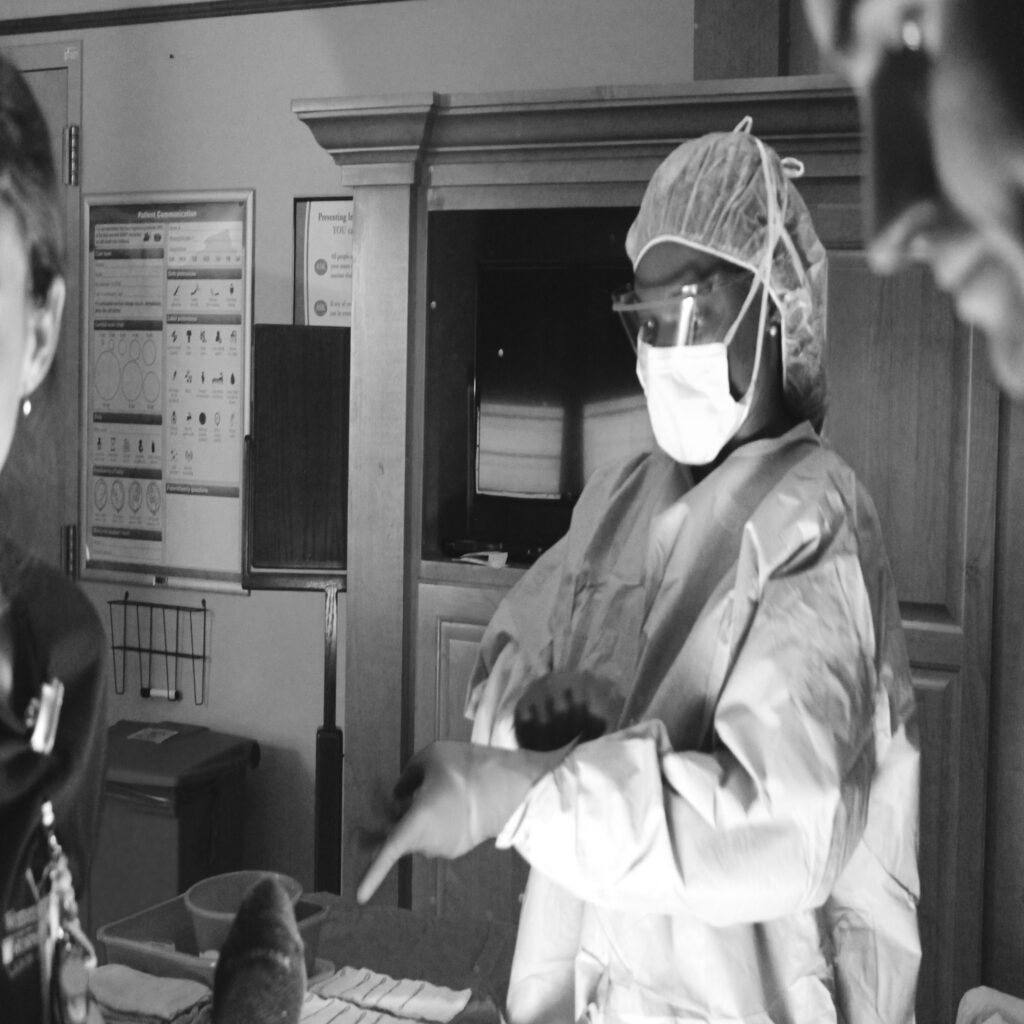
CNM- Certified Nurse Midwife
A CNM is a registered nurse with a graduate degree in midwifery training (some have doctorates, too!) Here in the Huntsville/Madison area, CNMs typically practice within a hospital setting and work alongside (in place of) an OBGYN for lower-risk pregnancies and births. They can prescribe medication and manage a broader scope of care within that hospital setting.
This option is, thankfully, gaining traction here in North Alabama. (When I started as a doula, there was only one CNM, and she couldn’t attend births.)
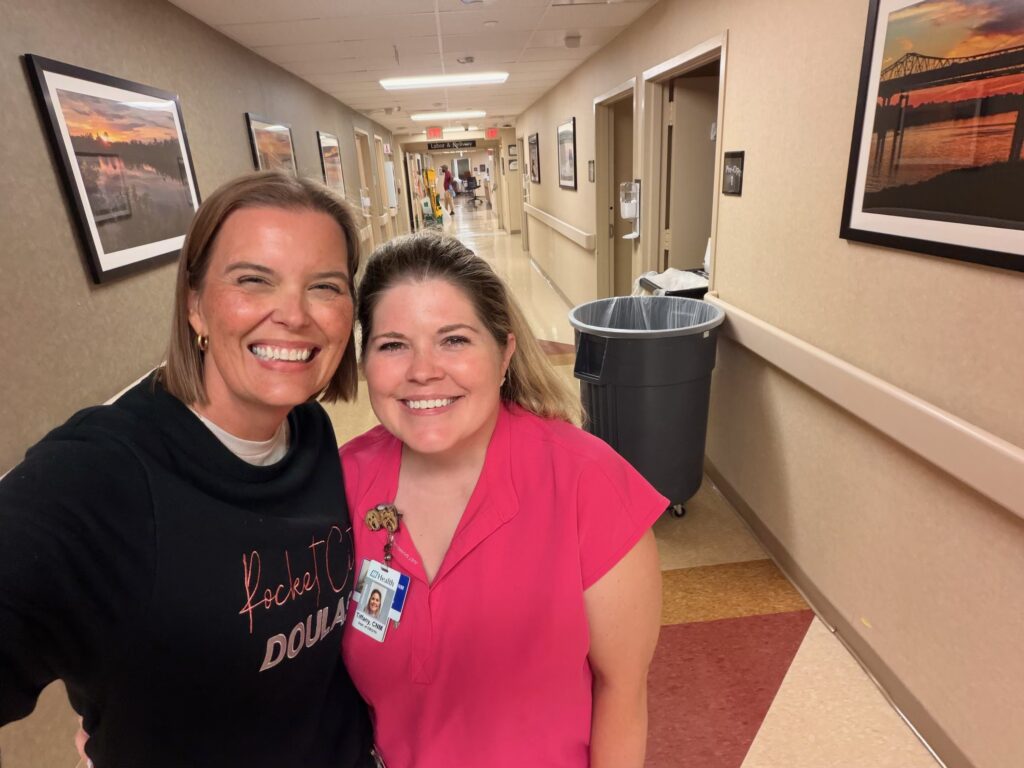
CPM- Certified Professional Midwife
A CPM trains and credentials specifically for out-of-hospital birth.They take a lower-intervention approach and are the ones you’d hire if you’re planning a home birth. Alabama’s two birth centers also have CPMs on staff alongside CNMs.
Alabama’s CPMs can only attend low-risk births and are required to transfer the mother to an obstetrician if complications arise. Our AL CPM’s cannot attend VBAC births, Multiples, or planned breech births.
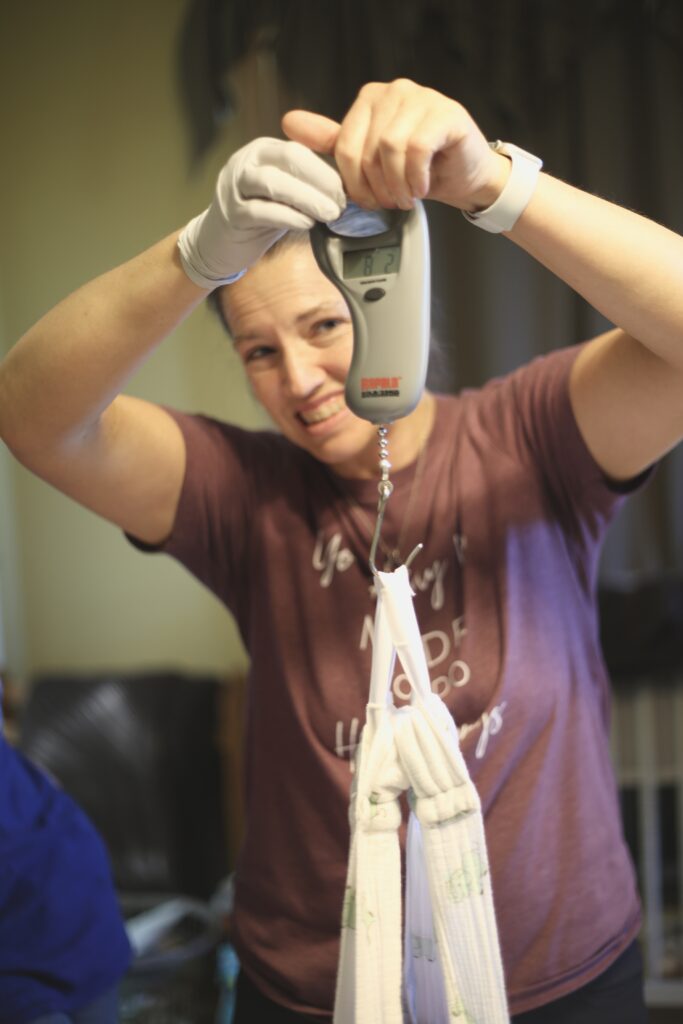
L&D Nurse- Labor and Delivery Nurse
If you are having your baby in the hospital, you’ll get a nurse assigned to you. They monitor you and your baby, carry out the orders from your OBGYN or CNM, and manage the medical side of your labor and birth. If we only discuss their role on paper, this is probably where we would end this description. However, most of the nurses we have had the honor of working with do so much more than that. They are helping you to the bathroom, encouraging you, holding your leg while you push. They’re grabbing you a warm blanket while you have the after-labor shakes when no one else thinks to ask. We have seen nurses go above and beyond their job description more times than we can count.
That said, a nurse still has to divide their attention. They may be caring for other patients at the same time, have charting and other tasks they must do, and they change shifts, so you could have several nurses over the course of your labor.
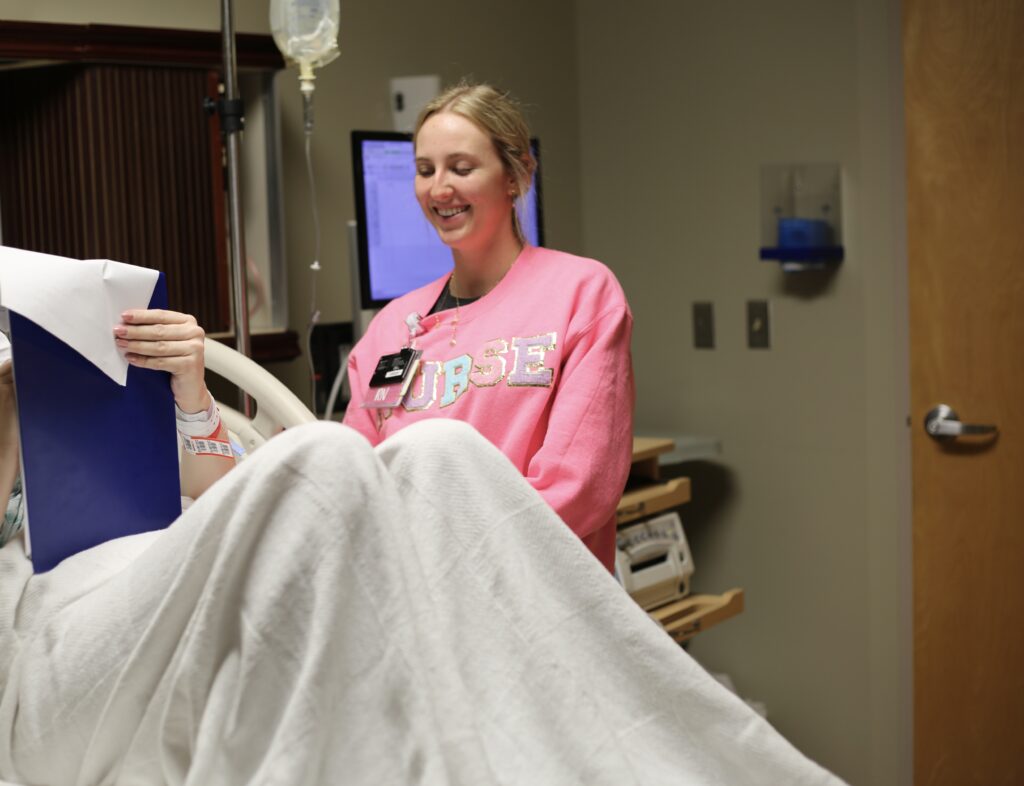
Labor Doula- doula for labor and birth
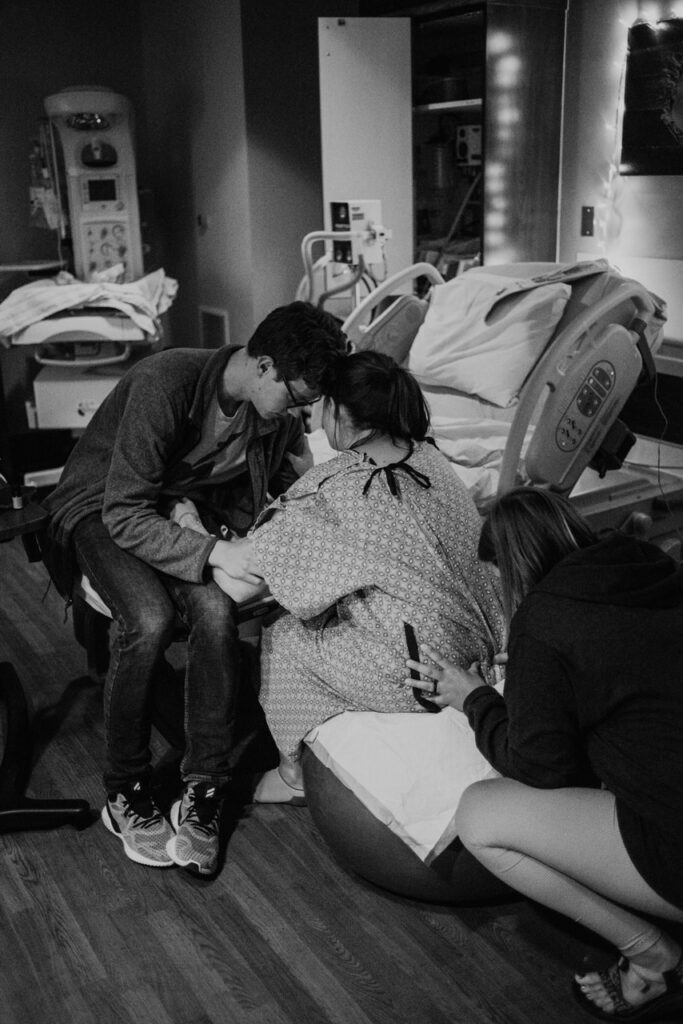
A doula is a non-medical support. We don’t perform medical tasks like cervical exams, blood pressure checks, or make medical decisions for you. What we do do (please read in Chandler Bing’s voice) covers a lot of ground. Sometimes it’s physical. Like helping with pain management or finding positions to help your labor progress. Sometimes it’s informational- okay, a lot of times it is here. Our engineers love that data! And we love that for them! Your doula may be helping you understand the tools the hospital has available and what the actual benefits and risks are in your specific situation (in the moment, not just in general). And sometimes (often times) it’s emotional. Almost everyone hits a point during labor where some emotion comes up. It might be excitement, anxiety, fear of the pain, feeling overwhelmed, sadness, happiness, etc.
At RCD our doulas also make sure your partner feels supported and included in a way that makes sense for them and your family. We help you both find the words when you need to ask your medical team something. We will help you both understand what’s actually being presented to you or help make sure your voice and your preferences are heard in the room.
PICD- Postpartum and Infant Care Doula
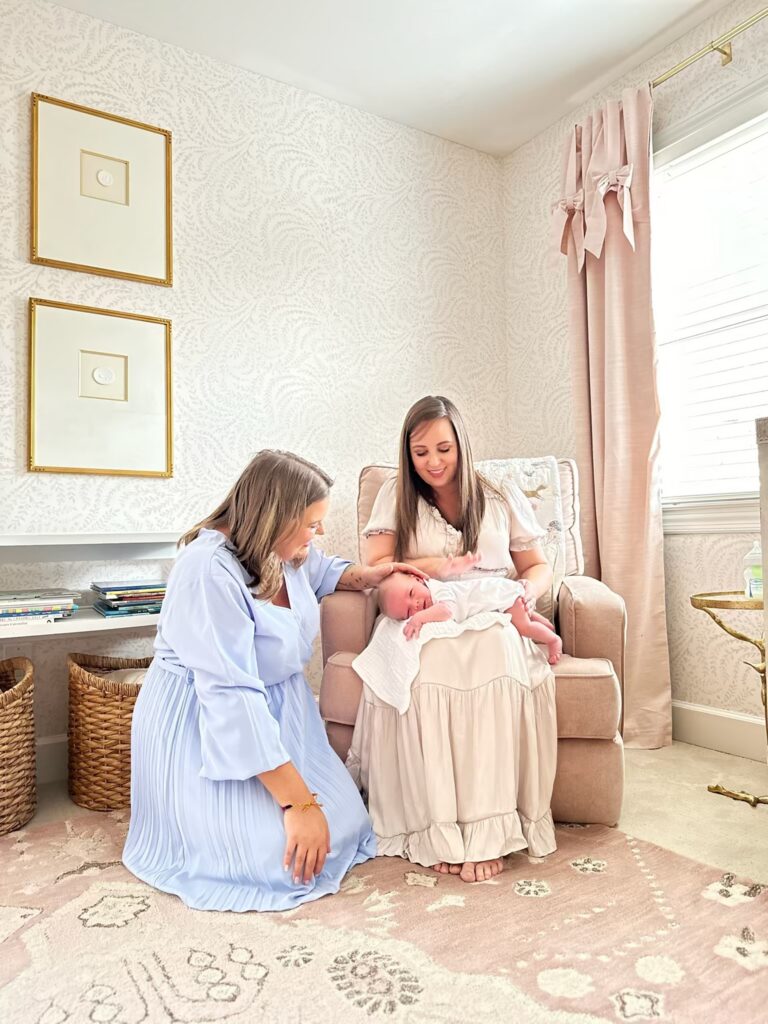
Postpartum doulas support the family after the baby arrives, usually at home. This includes newborn care education, help with feedings, recovery support, and helping the household adjust. This is not childcare or housekeeping, though it can look like both from the outside. Our goal as RCD postpartum doulas during day shifts is to help encourage your rest and to support recovery mentally, physically, and emotionally from giving birth. Our goal for overnights (yes, we do that!) is to help facilitate as much rest for the entire family as we can.
CBE- Childbirth Educator/Childbirth Education
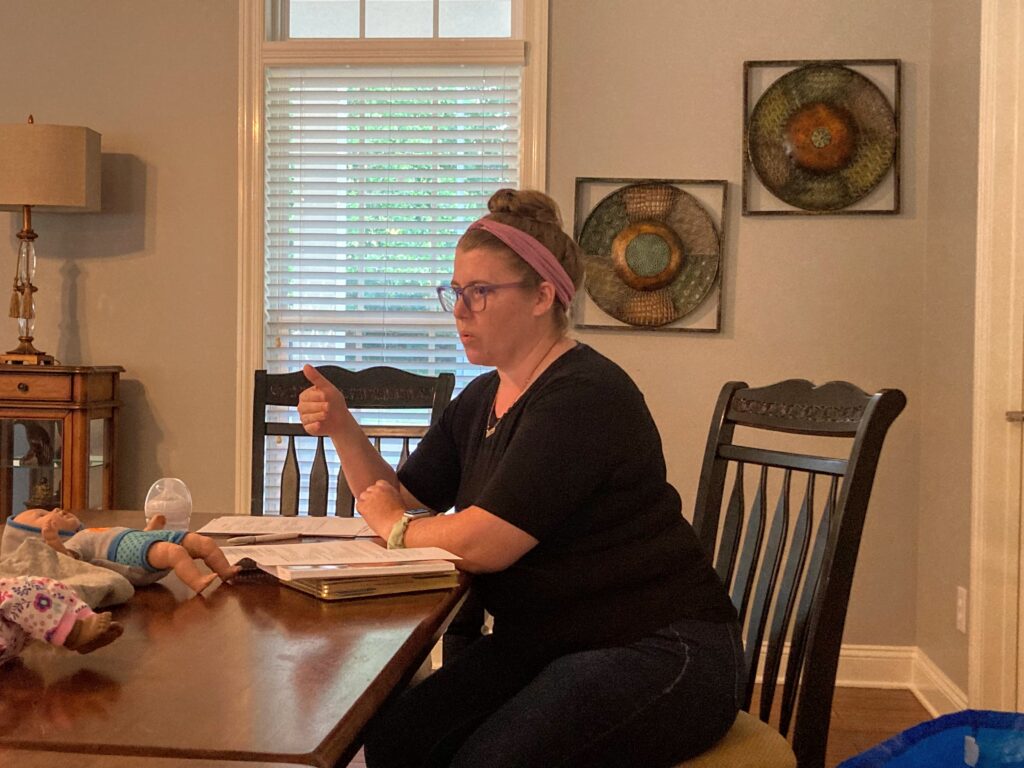
At RCD, professionals who also work directly in the birth space teach our CBE classes. We tailor our CBE courses to what each family needs. Our classes go into depth on pregnancy, birth, and postpartum that doula support alone can’t cover. Doula support happens in the moment, during labor and after. CBE spends hours walking through the full process ahead of time, so you already understand what’s happening before you’re in the middle of it. Some doulas are also certified childbirth educators (like those on our team), but the two roles are separate.
IBCLC- International Board Certified Lactation Consultant
An IBCLC has a clinical credential specifically for feeding support, breastfeeding, bottle feeding, and troubleshooting problems like latch issues or low supply. This is more specialized than the general feeding support a postpartum doula will provide. (We have some amazing IBCLC’s locally that we recommend!)
Pediatrician
Once the baby is born, a pediatrician takes over the baby’s medical care. Your baby will see them for well visits, vaccinations, growth checks, and being your go-to for anything that comes up with your baby’s health going forward. You’ll want to have a pediatrician lined up before birth, not something to figure out after you’re home. (Some people also use their general or family practice doctor for their baby’s care as well as their own.)
Sibling Doula
As I am sure you’re probably aware, many people who live here are from other places and moved to Huntsville with little to no community. Often families find themselves without people they trust to take care of their older children when they head to the hospital to give birth. A sibling doula is there to watch them during your birth or hospital stay so you don’t have to worry about childcare while you’re in labor, like I did with my third pregnancy. All of my people were gone, and I started to go into labor early. I had visions of walking door-to-door in my neighborhood with my two kids, contracting, trying to find someone to keep my kids so I could go to the hospital. Thankfully, labor stopped until my people returned home.
Sibling doulas are trained to help your kids through the experience. Your sibling doula will keep them comfortable, and make sure they feel taken care of while you’re focused on the birth.
The Dream Team
While there may be some overlap, none of these roles replace each other. They are distinct in their type of support and their role on your birth/postpartum team. Your dream team isn’t one person responsible for it all. It’s the right people working collaboratively, all showing up for you and your family.
If you’re building your birth and postpartum team and aren’t sure where to start, that’s what we’re here for at Rocket City Doulas. Your Birth Team: A Guide to Who Does What is just the starting point, we’re the next step. Reach out, and we’ll help you figure out what kind of support actually makes sense for your family.